-
The Patient Will See You Now
For two decades, technology has expanded patient agency over information. Search put medical knowledge in the browser. Wearables put physiology on the wrist. LLMs put explanation on demand. All of that mattered, but none of it changed where medicine begins. Patients became better informed participants in institutional care. They could read more, track more, and…
-
The Jevons Paradox of AI: What Programmers and Medical Scribes Reveal About the Future of Work
The prevailing narrative about AI and white-collar work is a displacement story: AI learns a cognitive task, the humans who perform that task lose their jobs, and the only question is how fast it happens. Software engineers are the canary. Lawyers and accountants are next. Eventually, the thinking goes, most knowledge work gets automated away.…
-
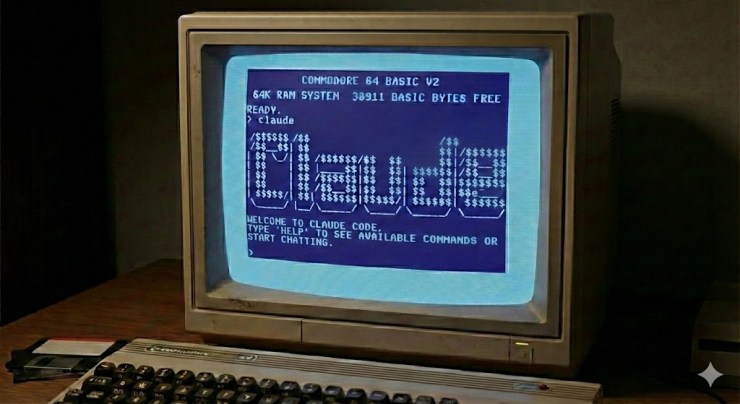
The Blinking Cursor Returns: Finding My Childhood in the AI Agent Era
AI agents brought back the command line—and my childhood. How the blinking cursor became the new interface for building with AI.
-
The Humbling Math of Health AI: Why ChatGPT Can’t Grade Your Heart Yet
ChatGPT scored just 28% on a healthcare benchmark. Why AI health tests reveal a humbling gap between medical hype and clinical reality.
-
When You Upload Your Medical Records to AI, Who’s Actually Protecting Them?
40M people ask ChatGPT health questions daily. When you upload medical records to AI, no law guarantees privacy. Here’s what’s at stake.
-

A Year of Talking to Computers
I shipped four iOS apps in a month without being an engineer. A year of AI coding taught me the bottleneck moved from building to judgment.
-
Your Gut is a Value Function
Your gut isn’t mysticism—it’s a value function trained on real outcomes. Why AI decision making can’t replicate human intuition built over decades.
-
Strategy in the Age of Infinite Slop
AI generates infinite strategy options but can’t judge which survive reality. Why AI slop won’t replace human judgment in content strategy.
-
The New Computer in the Clinic
Healthcare is shifting from point-and-click EHRs to AI clinical workflow. LLMs can read narratives, but safe actions need deterministic guardrails.
-
AI and the Prepared Mind: Engineering Luck in Drug Discovery
AI drug discovery designs perfect molecules, but 70% die in Phase 2. The gap isn’t chemistry—it’s the embodied clinical context AI can’t replicate.